
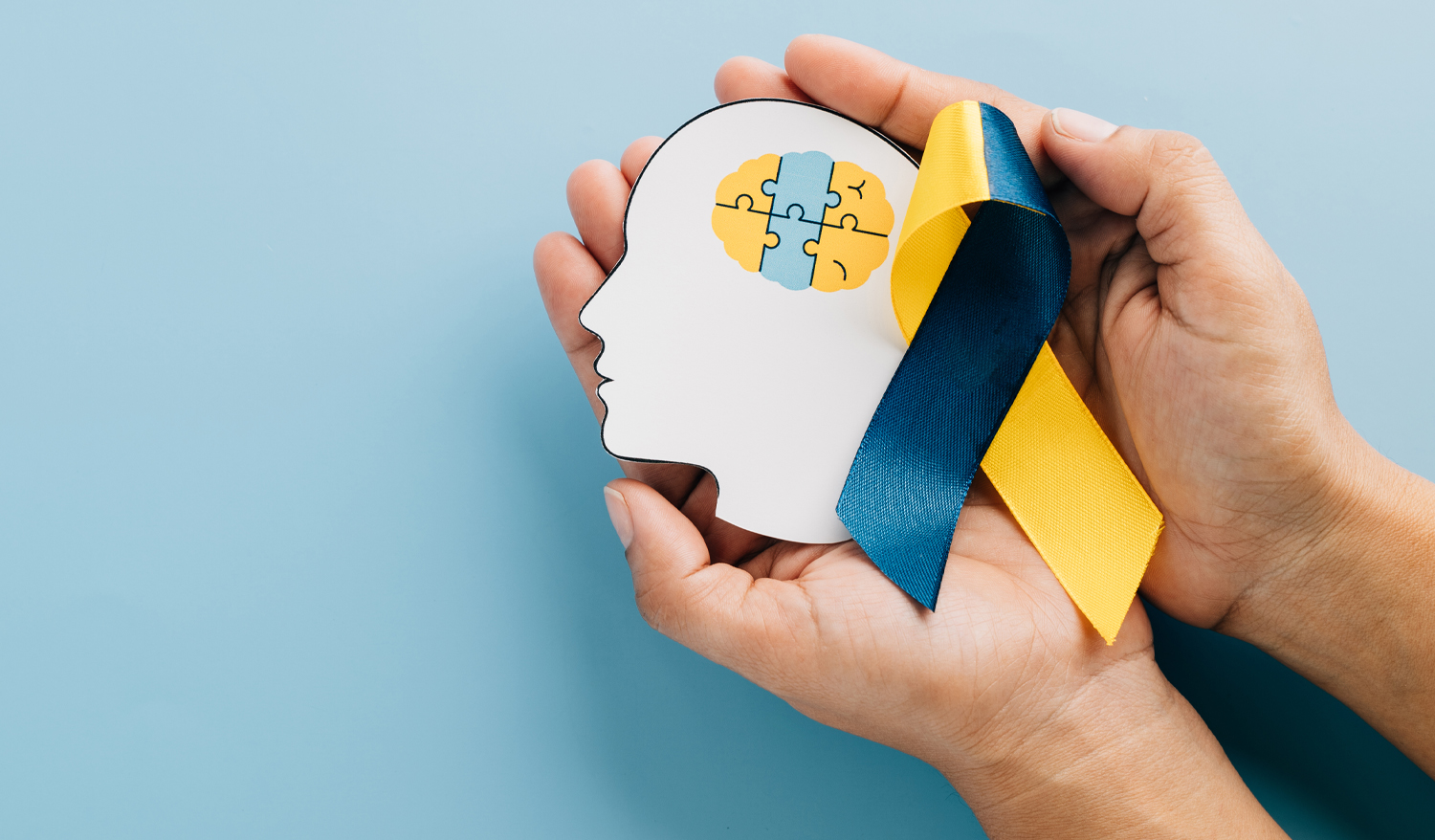
Beyond the Stigma: Living with a Mental Health Challenge
-
by
 PHS
PHS
Key Takeaways
- Living with mental health challenges requires constant energy to balance daily responsibilities like work, family, and regular tasks.
- Shifting our regular vocabulary from old labels to person-first language allows us to focus on the individual and build an empathetic environment.
- True danger links much more closely to social conditions than to a health diagnosis, and the vast majority of individuals are not violent.
- Everyday coping habits like structured routines, mindfulness, and regular physical activity help individuals successfully manage their health symptoms.
- Neighborhoods can create safe spaces by supporting community-based, person-centered services that promote social inclusion and protect human rights.
- Active allyship involves practical actions like listening without judgment, offering everyday help, and raising our personal mental health literacy.
Safe homes and kind words change lives. Many people use the term mental illness when they talk about these deep struggles. In our work, we find that focusing on people experiencing mental health challenges helps us see the real person first. This way of speaking reminds us that a health challenge is just one part of a full life. This simple shift creates a welcoming space where everyone feels respected and valued as they build stability.
Negative attitudes and stereotypes create mental health stigma. This stigma shows up in public views, personal feelings, and systemic biases. People across the world face unfair treatment and human rights violations even though their health conditions are treatable. This bad treatment reduces their quality of life, stops them from joining activities, and limits their access to proper healthcare.
Stigma keeps people from getting the medical care they need. It causes individuals to delay their care or stop their treatment entirely. Many people worry about telling others how they feel because they fear judgment and this fear builds a wall of isolation and shame. People can then internalize this shame, blame themselves, and feel deeply flawed.
We can change this story through education and advocacy. Bringing people together to talk about living with mental health challenges is one of the best ways to lower stigma. True social contact changes attitudes and behaviours and helpful programs improve knowledge and support help-seeking habits from an earlier age. We can build a safe community when we listen to people with lived experience and work together.
Understanding Stigma: What It Looks Like and How It Harms
Stigma shows up in our world in three clear ways. The first way is public stigma, which means negative or discriminatory attitudes that people hold against those facing health challenges. This type of stigma includes fear, rejection, and avoidance. Many people wrongly believe that individuals facing these challenges are dangerous and incompetent. Education and social contact help reduce these public misconceptions, especially among adults.
The second way is self-stigma, which happens when individuals take these negative societal views to heart. People experience deep personal shame and feel inadequate because they internalize these outside beliefs. This internal shame leads to poorer health outcomes and makes recovery much more difficult.
The third way is structural stigma, which lives inside our laws, policies, and large institutions. These unfair systems actively limit the rights, care, and daily opportunities of individuals who need support. Institutional bias within the healthcare system reduces access to care and worsens overall quality of treatment. It creates fragmented and unequal services, which forms a major barrier for individuals trying to reach out for medical assistance.
These three forms of stigma join together to make life much harder for people building stability. They prevent or delay many individuals from seeking medical help in the first place. Many people also stop their treatments early because they feel judged by society. Stigma lowers active help-seeking behaviours across all age groups.
The Reality of Living with Mental Health Challenges
Daily life brings many responsibilities, and balancing them can be tough when you face health struggles. Managing health symptoms alongside jobs, family, and daily tasks requires a lot of energy. These conditions often make regular work much harder to complete. High job demands, low control over tasks, workplace bullying, and a lack of social support from co-workers also increase the risk of developing these conditions.
Getting proper medical help presents another major obstacle for individuals. According to the National Institute of Mental Health, only about half of people who need support actually receive professional treatment, leaving a massive gap between medical needs and actual care. Finding the right resources takes time and energy that people do not always have when they are struggling. When individuals do try to find help, a lack of connected services can make the process feel confusing and overwhelming.
The emotional weight of managing these challenges in a misinformed world causes deep personal pain. People face intense loneliness, social isolation, and extreme relationship strain when they feel misunderstood by the people around them. This heavy burden forces individuals into deep secrecy as they try to hide their struggles from employers, friends, and neighbours. Internalizing this heavy burden harms personal wellbeing and slows down the long-term journey towards stability.
Replacing False Beliefs with Facts
Many common myths cause people to misunderstand what it means to be living with mental health challenges. One major myth is that individuals facing these conditions are violent or unpredictable. Research shows that the vast majority of people are not violent, and they contribute to only a tiny amount of society violence. A study by Stuart (2003) found that individuals living with mental health challenges are actually far more likely to become targets of violence than harm to others. With proper treatment and community support, people successfully manage their health symptoms, participate in family life, and live peaceful, satisfying lives.
Another misconception is that these conditions show personal weakness or flaw in character. These struggles are legitimate health concerns that change how a person thinks, feels, and behaves. They come from complex mixtures of genetics, biology, life experiences, and environmental factors instead of a lack of effort. Doctors diagnose and treat these conditions using clear medical tools, talk therapy, and social services. They affect brain function and overall health, meaning they require the same careful medical attention as any long-term physical illness.
People also wrongly believe that individuals cannot work or maintain independent lives. Many individuals hold regular jobs and grow successful careers when workplaces offer simple supports. Programs that assist with job placement help people find and keep competitive positions at great rates. Community support services also allow people to live on their own and stay active in their neighborhoods. Recovery does not mean all symptoms must disappear forever. Instead, recovery means building a meaningful life, keeping close relationships, and reaching personal goals even when health challenges exist.
The last main myth is the idea that you can just snap out of it using willpower. These struggles do not fade away through willpower alone and ignoring them can cause symptoms to worsen over time. Real healing requires proper healthcare and community systems. Excellent treatments exist, including psychological therapies, medication, social support networks. Scaling up these interventions brings massive social, economic, and personal rewards. Combining professional treatment with regular community support improves long-term wellbeing and elevates the quality of life for everyone involved.
Everyday Strategies for Building Stability
Building a strong network of people forms a major piece of your personal foundation. Connecting with friends and family members is linked with better health outcomes and less everyday pressure. Peer support services elevate your hope, personal confidence, and overall quality of life. Family and neighborhood connections are key protective factors that assist recovery and long-term wellbeing. Walking alongside people you trust keeps you grounded in community.
Developing personal habits helps you handle difficult moments. Mindfulness practices reduce regular feelings of anxiety and distress across many different populations. Adding regular physical activity to your schedule lowers symptoms of depression and acts as a great self-management tool. Structured daily routines, good sleep habits, relaxation methods, and self-care behaviours help manage everyday health symptoms.
Reaching out for professional services is a vital step toward long-term independence. Psychotherapy and medication can lower symptoms and improve daily functioning. Effective medical interventions exist for a wide range of needs, though finding care remains difficult in many locations. Using community-based services improves your access to care, keeps your treatment steady, and increases social inclusion compared to institutional care models alone.
Learning to speak up for your needs empowers you on your journey. Practicing shared decision-making with your doctor and care team can have a positive impact on your treatment satisfaction. Having open conversations and setting up simple workplace changes help employees stay active and successful at their jobs. Communicating your goals, understanding your rights, and participating in your treatment planning are essential parts of person-centered care.
The Role of Community in Reducing Stigma
Neighbourhoods can create safe environments where people thrive. Community-based and person-centred mental health services are most effective because they promote social inclusion, protect human rights, and support recovery within the community rather than isolating individuals. Environments that foster social connection, peer support, and inclusion reduce stigma and improve recovery outcomes for people living with mental health challenges. Meaningful social contact between people with and without these challenges is one of the most effective ways to reduce stigma and increase understanding.
Local training and groups help neighbourhoods become more welcoming places. Programs like Mental Health First Aid improve mental health literacy, reduce stigma, and increase supportive behaviours towards people experiencing mental health challenges. Community programs that include education and direct contact with people who have lived experience consistently lower stigmatizing attitudes. Local support groups, peer-support programs, and community mental health services strengthen social connectedness and help individuals engage more fully in community life.
Progressive Housing Society actively builds these safe spaces in the communities where we work. Our organization provides mental health supports, supportive housing, outreach services, emergency shelters, and harm-reduction services for individuals facing mental health challenges, homelessness, and substance misuse. These actions directly reduce social exclusion and stigma through community-based support. The team uses a client-centred approach that meets individuals where they are in their journey and supports them through personalized services designed to improve independence and quality of life. We work closely with government and community partners to expand supportive housing and shelter programs, creating real opportunities for housing, support services, and community inclusion.
How to Be an Ally: Supporting People with Mental Health Challenges
Listening with empathy forms the foundation of true support. Providing a safe, nonjudgmental space allows individuals to speak openly without the fear of being misunderstood. When people feel heard, it directly reduces their sense of isolation and encourages them to share their struggles. Thoughtful conversations show a person that they are valued, which strengthens their personal resilience and improves their overall wellbeing. Simply showing up and listening with an open heart acts as a powerful tool in a person’s daily environment.
Shifting our daily language habits removes a major barrier to inclusion. Mindful communication involves using person-first phrasing that separates an individual from their health condition. Choosing respectful words alters how society views health struggles and increases a person’s willingness to reach out for medical support. When we actively choose supportive terms in our regular conversations, we help create a welcoming environment. This small shift in our daily vocabulary allows people to feel safe instead of hidden or defined by a single aspect of their life.
Practical actions provide tangible relief during the recovery process. Helping a friend by accompanying them to medical appointments or assisting with daily tasks reduces the pressure of managing a health challenge alone. Peer interactions build hope and personal confidence, making it easier for individuals to stay engaged with their care plans. Involving friends and family members in client-centred care improves long-term health outcomes and helps individuals stay connected to their local neighborhoods.
Building your own knowledge allows you to support loved ones effectively. Raising your personal awareness helps you recognize when someone needs assistance and leads to more compassionate reactions. Taking structured training, such as Mental Health First Aid, gives you the skills and confidence needed to offer help during a difficult moment. Expanding our understanding across our neighborhoods ensures that no one has to walk through their challenges without an educated community standing behind them.
Shifting the Narrative Around Mental Health
Advocacy led by people with lived experience sits at the very centre of reducing stigma. Hearing direct stories challenges unfair stereotypes and promotes real inclusion across our neighborhoods. Community efforts work best when they combine everyday education with meaningful contact between different people. Shifting the narrative requires all of us to become active advocates for awareness in our local spaces.
Normalizing everyday conversations about wellbeing builds a foundation for deep empathy. Positive social contact remains one of the strongest ways to reduce prejudice towards individuals facing health struggles. Open communication reduces harmful labels by utilizing respectful language that centers on the person first. General education improves our ability to recognize when someone needs assistance. Learning about these experiences leads to more helpful responses when people in our neighbourhood encounter challenges.
Everyday actions create meaningful change over time. Speaking up against stigmatizing words matters because using respectful language directly lowers social exclusion. Sharing information and participating in regular social interactions can shift public attitudes. Small steps help create a safe environment where everyone can feel valued wherever they are in their journey.
Building a Community of Care and Respect
Dignity grows when a neighbourhood decides to walk alongside people as partners. Wellbeing requires more than just medical treatment; it thrives on connection, understanding, and the safey of a stable place to call home. By choosing words that honour each person’s unique story, we can replace the old societal barriers with real empathy. This shift in our daily actions creates a community where no one has to hide their struggles or face isolation. We can build a healthier community where everyone feels valued and respected.
Progressive Housing Society builds these foundations every day through housing with the integrated supports people need to live independently. Your donations directly sustain these local programs, shelters, and outreach teams. Please consider donating today to help expand these safe spaces across our neighbourhood. If you or someone you care about needs support or mental health resources, you can submit a referral to connect with our services.
References
American Psychiatric Association. (n.d.). Stigma, prejudice and discrimination against people with mental illness.
American Psychiatric Association. (n.d.). What is mental illness?
Centers for Disease Control and Prevention. (2024). Tips for stigma-free communication about mental health.
Centers for Disease Control and Prevention. (2026). Mental health stigma.
Clement, S., Schauman, O., Graham, T., Maggioni, F., Evans-Lacko, S., Bezborodovs, N., Morgan, C., Rüsch, N., Brown, J. S. L., & Thornicroft, G. (2015). What is the impact of mental health-related stigma on help-seeking? A systematic review of quantitative and qualitative studies. Psychological Medicine, 45(1), 11–27.
Corrigan, P. W., Morris, S. B., Michaels, P. J., Rafacz, J. D., & Rüsch, N. (2012). Challenging the public stigma of mental illness: A meta-analysis of outcome studies. Psychiatric Services, 63(10), 963–973.
Crockett, M. A., Núñez, D., Martínez, P., Borghero, F., Campos, S., Langer, Á. I., Carrasco, J., & Martínez, V. (2025). Interventions to reduce mental health stigma in young people: A systematic review and meta-analysis. JAMA Network Open, 8(1), e2454730.
de Oliveira, C., Saka, M., Bone, L., & Jacobs, R. (2022). The role of mental health on workplace productivity: A critical review of the literature. Applied Health Economics and Health Policy, 21(2), 167–193.
Du, N., Chong, E. S. K., Wei, D., Liu, Z., Mu, Z., Deng, S., & Huang, Y.-T. (2023). Prevalence, risk, and protective factors of self-stigma for people living with depression: A systematic review and meta-analysis. Journal of Affective Disorders, 332, 327–340.
Dubreucq, J., Plasse, J., & Franck, N. (2021). Self-stigma in serious mental illness: A systematic review of frequency, correlates, and consequences. Schizophrenia Bulletin, 47(5), 1261–1287.
Frederick, D. E., & VanderWeele, T. J. (2019). Supported employment: Meta-analysis and review of randomized controlled trials of individual placement and support. Psychiatric Services, 70(9), 746–755.
Gillard, S., Foster, R., Gibson, S., Goldsmith, L., Marks, J., & White, S. (2017). Describing a principles-based approach to developing and evaluating peer worker roles as peer support moves into mainstream mental health services. Mental Health and Social Inclusion, 21(3), 133–143.
Goldberg, S. B., Riordan, K. M., Sun, S., & Davidson, R. J. (2022). The empirical status of mindfulness-based interventions: A systematic review of 44 meta-analyses of randomized controlled trials. Perspectives on Psychological Science, 17(1), 108–130.
Harvey, S. B., Modini, M., Joyce, S., Milligan-Saville, J. S., Tan, L., Mykletun, A., Bryant, R. A., Christensen, H., & Mitchell, P. B. (2017). Can work make you mentally ill? A systematic meta-review of work-related risk factors for common mental health problems. Occupational and Environmental Medicine, 74(4), 301–310.
Knaak, S., Mantler, E., & Szeto, A. (2017). Mental illness-related stigma in healthcare: Barriers to access and care and evidence-based solutions. Healthcare Management Forum, 30(2), 111–116.
Kutcher, S., Wei, Y., & Coniglio, C. (2016). Mental health literacy: Past, present, and future. The Canadian Journal of Psychiatry, 61(3), 154–158.
Livingston, J. D. (2020). Structural stigma in health-care contexts for people with mental health and substance use issues: A literature review. Mental Health Commission of Canada.
Morgan, A. J., Ross, A., & Reavley, N. J. (2018). Systematic review and meta-analysis of Mental Health First Aid training: Effects on knowledge, stigma, and helping behaviour. PLOS ONE, 13(5), e0197102.
National Academies of Sciences, Engineering, and Medicine. (2016). Ending discrimination against people with mental and substance use disorders: The evidence for stigma change. National Academies Press.
National Institute of Mental Health. (n.d.). Caring for your mental health.
National Institute of Mental Health. (n.d.). Mental illness.
Parcesepe, A. M., & Cabassa, L. J. (2013). Public stigma of mental illness in the United States: A systematic literature review. Administration and Policy in Mental Health and Mental Health Services Research, 40(5), 384–399.
Pescosolido, B. A., Halpern-Manners, A., Luo, L., & Perry, B. L. (2021). Trends in public stigma of mental illness in the US, 1996–2018. JAMA Network Open, 4(12), e2140202.
Prizeman, K., Weinstein, N., & McCabe, C. (2023). Effects of mental health stigma on loneliness, social isolation, and relationships in young people with depression symptoms. BMC Psychiatry, 23, 527.
Prizeman, K., Weinstein, N., & McCabe, C. (2024). Stigma and its impact on disclosure and mental health secrecy in young people with clinical depression symptoms: A qualitative analysis. PLOS ONE, 19(1), e0296221.
Schnyder, N., Panczak, R., Groth, N., & Schultze-Lutter, F. (2017). Association between mental health-related stigma and active help-seeking: Systematic review and meta-analysis. The British Journal of Psychiatry, 210(4), 261–268.
Singh, B., Olds, T., Curtis, R., Dumuid, D., Virgara, R., Watson, A., Szeto, K., O’Connor, E., Ferguson, T., Eglitis, E., & Miatke, A. (2023). Effectiveness of physical activity interventions for improving depression, anxiety and distress: An overview of systematic reviews. British Journal of Sports Medicine, 57(18), 1203–1209.
Slade, M., Amering, M., Farkas, M., Hamilton, B., O’Hagan, M., Panther, G., Perkins, R., Shepherd, G., Tse, S., & Whitley, R. (2014). Uses and abuses of recovery: Implementing recovery-oriented practices in mental health systems. World Psychiatry, 13(1), 12–20.
Stuart, H. (2003). Violence and mental illness: An overview. World Psychiatry, 2(2), 121–124.
Taylor, S. E. (2011). Social support: A review. In H. S. Friedman (Ed.), The Oxford handbook of health psychology (pp. 189–214). Oxford University Press.
Thornicroft, G., Sunkel, C., Alikhon Aliev, A., Baker, S., Brohan, E., El Chammay, R., Davies, K., Demissie, M., Duncan, J., Fekadu, W., Gronholm, P. C., Guerrero, Z., Gurung, D., Habtamu, K., Hanlon, C., Heim, E., Henderson, C., Hijazi, Z., Hoffman, C., … Winkler, P. (2022). The Lancet Commission on ending stigma and discrimination in mental health. The Lancet, 400(10361), 1438–1480.
World Health Organization. (2021). Guidance on community mental health services: Promoting person-centred and rights-based approaches.
World Health Organization. (2022). World mental health report: Transforming mental health for all.
World Health Organization. (2024). Mental health at work.
World Health Organization. (2026). Mental health.